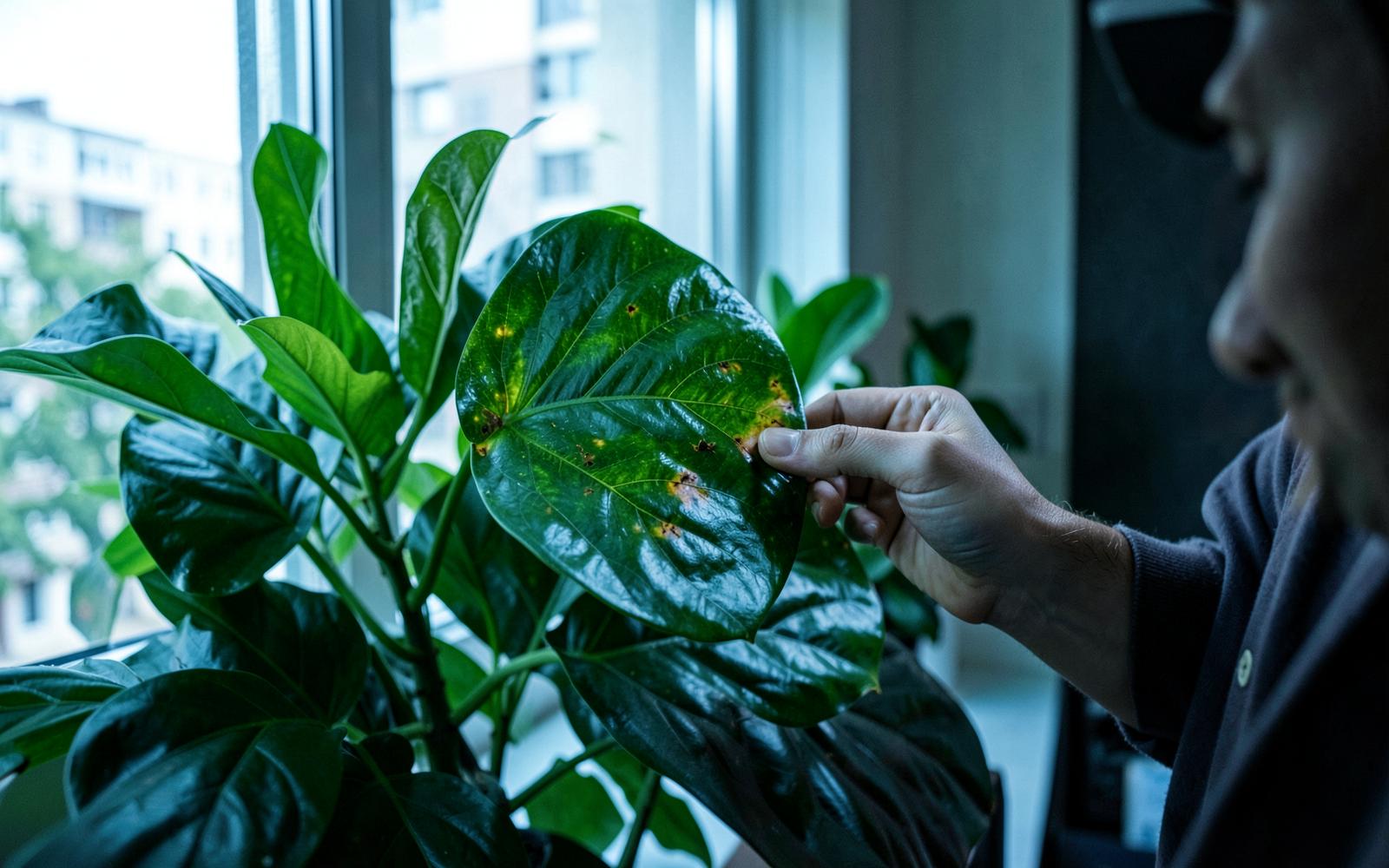
The most useful scan is not the one that sounds certain. It is the one that helps you notice evidence, expose uncertainty, and decide what to inspect next.
Observation
Create a small evidence set
Take a full-plant image in its normal location, a close view of the affected leaf, the underside of that leaf, the stem junction, and the soil surface. Include an unaffected leaf for comparison.
Tell the dialogue about watering changes, moves, temperature shifts, pests seen, and how quickly the symptom appeared.
Observation
Ask about patterns, not diagnoses
Useful visual questions include whether damage follows veins, edges, exposed surfaces, new growth, or isolated points. Ask what observations would support or weaken each possible explanation.
This keeps several hypotheses open instead of allowing one familiar pattern to dominate the conversation.
Observation
Choose the lowest-risk next observation
The next step may be checking moisture below the surface, isolating the plant while inspecting for pests, or improving the capture under neutral light—not immediately applying a treatment.
For toxic plants, serious infestations, or valuable specimens, consult a reliable horticultural source or local expert.
What to remember
- Capture the whole plant and the affected detail.
- Look for patterns across old and new growth.
- Avoid treatment until you have better evidence.
Try this scan
Bring the question to your own image.
“Describe the visible plant symptoms and suggest what additional evidence would narrow the possibilities.”Open scanner