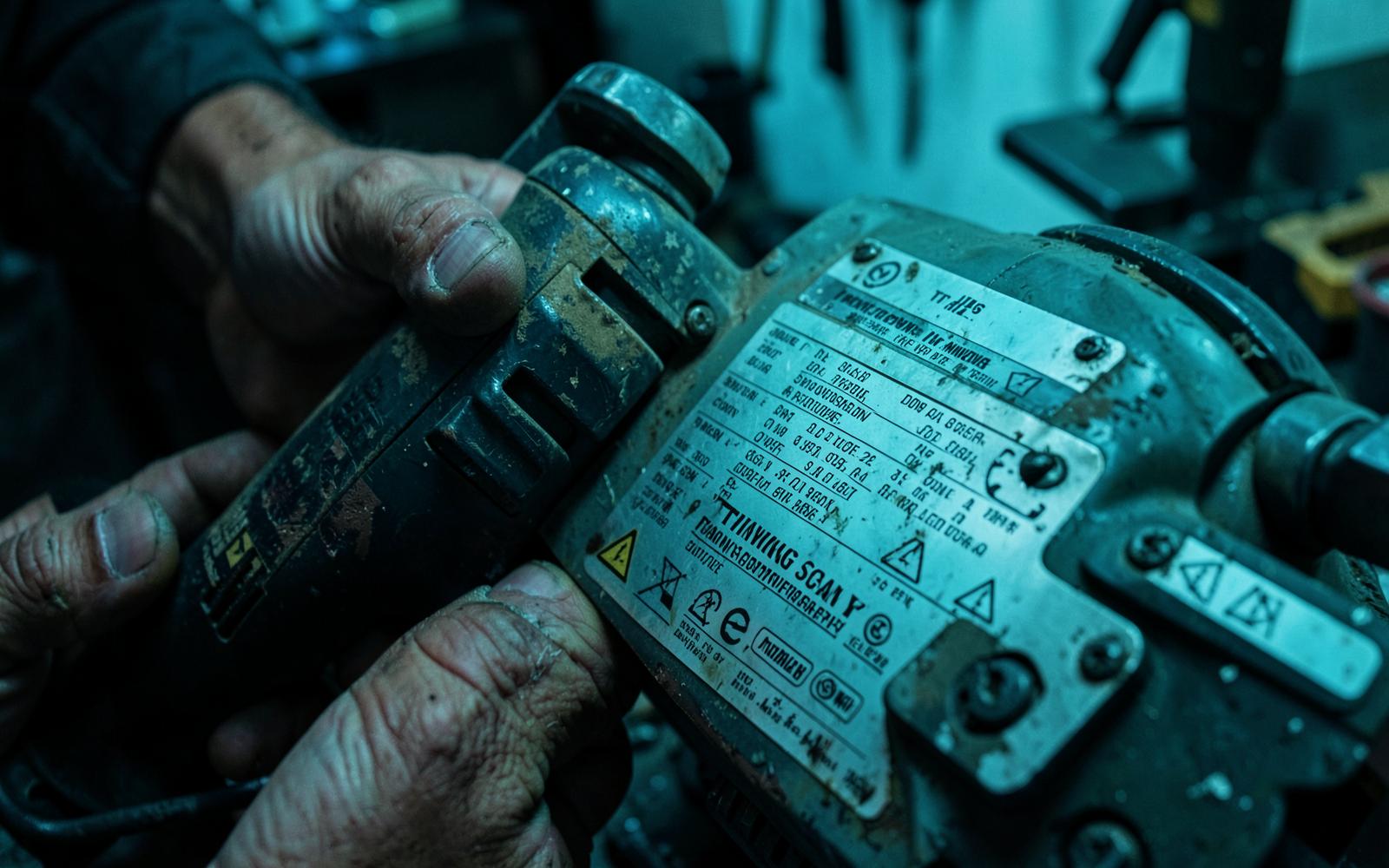
The most useful scan is not the one that sounds certain. It is the one that helps you notice evidence, expose uncertainty, and decide what to inspect next.
Observation
Capture for legibility
Clean the viewing surface only when it is safe to do so. Keep the camera parallel to the label, fill the frame, and use diffuse light from the side to reduce glare. Take one contextual image showing where the label sits and one close image for text.
If stamped or engraved characters are faint, a second angle may reveal shadows that the first image missed.
Observation
Transcribe before interpreting
Ask for the visible text exactly as shown and request uncertain characters in brackets. Only then ask what the model number, voltage, material code, care symbol, or manufacturing mark might mean.
This separation makes it easier to spot when an explanation depends on a misread character.
Observation
Verify consequential markings
Translate can make a label easier to explore, but it should not be the sole basis for electrical work, dosage, allergen decisions, regulatory compliance, or machine operation.
Use the manufacturer documentation, current local guidance, or a qualified person when the marking affects health, safety, money, or legal obligations.
What to remember
- Fill the frame and avoid glare.
- Ask for an exact transcription before interpretation.
- Verify safety and compliance information with official sources.
Try this scan
Bring the question to your own image.
“Read the visible markings, separate observation from interpretation, and flag anything unclear.”Open scanner